
Why I Became an End-of-Life Doula
I sometimes think this work began long before I ever knew it had a name.
When I was growing up in a small town in Maine, my mother was a person people called when someone was dying at home and the family needed a steady presence. She didn’t have training or a title. She was a farm wife, a mother of four, and the one people trusted to sit vigil when they couldn’t do it alone. We didn’t have language for it then, but looking back, she was doing the quiet, essential work of an end-of-life doula — someone who offers non-medical presence, guidance, and companionship through the dying process — long before the role existed in the way we talk about it today.
Years later, when I left for college, she did too. I was her youngest, and she had quietly waited until I went off before she finally pursued a dream none of us knew she carried. At forty-eight, she enrolled at the same university I was attending — something I didn’t appreciate at the time, though it makes me smile now — and became a nurse. She went on to work in hospice and home care well into her seventies. My sister followed the same path. In our family, tending to people at the end of life wasn’t unusual — it was simply part of how we understood love.
But the moment that shaped me most came much later.
My sister and her former husband died within days of each other. Grief like that doesn’t move in a straight line. It piles up, each loss landing before the last one has had time to settle. We were all trying to make sense of the shock, the logistics, and the heartbreak of losing two people so close together.
His funeral was on a Saturday, her memorial service on Sunday. That Sunday evening, after her service, my mother told me that a veterinarian she knew would be coming to the house the next morning to euthanize her cat, Yanni Anne, and she asked me to help her.
The vet arrived on Monday and explained each step gently, mostly for my benefit. When it was over, she asked if we needed help with the body. My mother said that I would take care of it. And so, the day after burying my sister’s cremains, I buried my mother’s cat in the woods behind her cabin.
The weight of grief, the trees standing guard around me, and the finality of that small warm body in my hands and then in the earth were enough to break something open inside me. All the bottled emotion of those days — the losses, the people, the relentless forward motion — came flooding out in the quiet of those woods.
I was with both my sister and my mother when they died, not only at the moment of their deaths but in the days leading up to them. They weren’t the first or the last people I accompanied as they died, but they were the most impactful. Those moments taught me something about presence that no training ever could.
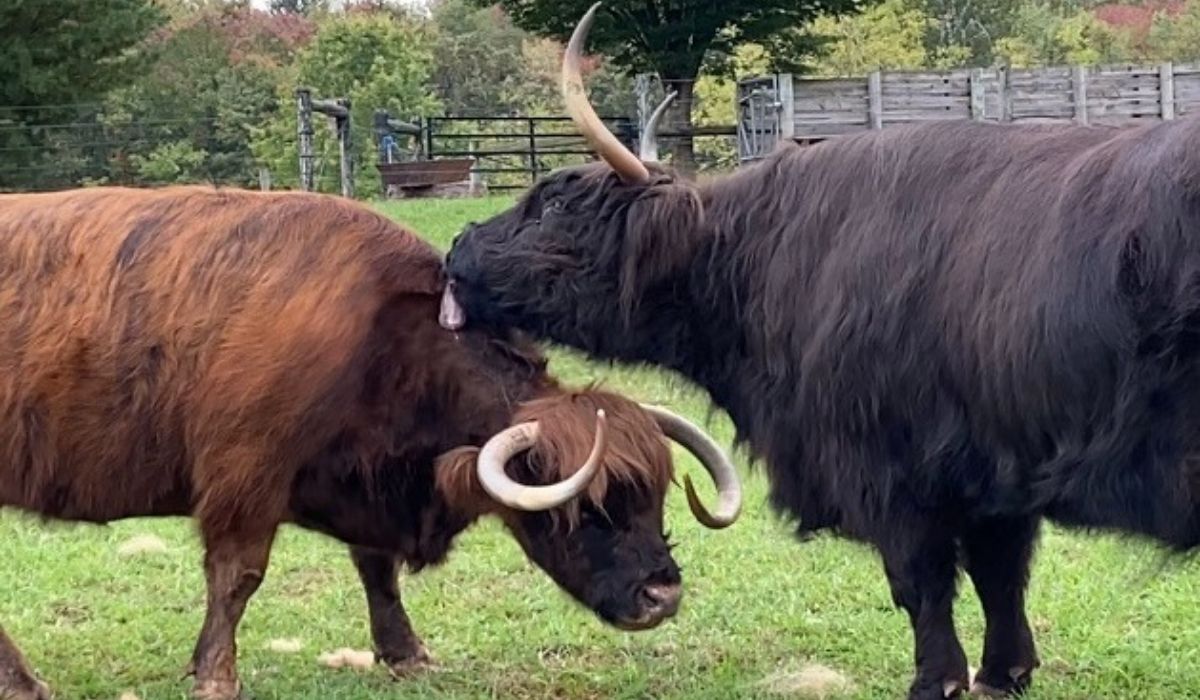
After my mother died, I found myself thinking more deeply about how we approach death — how we fear it, avoid it, soften it with euphemisms, or pretend it’s optional by saying if I die instead of when. Around that time, I was caring for a small herd of Scottish Highland cows who were more like friends than farm animals. Five of them died during the years I cared for them, and it was the surviving cows who deepened my understanding in ways I hadn’t anticipated.
They stood beside their injured or ailing sisters. They kept vigil. They visited their burial spots every day for weeks.
Their grief was instinctive, communal, and unashamed. Watching them, I found myself asking why animals seem to handle death with a kind of grace and acceptance that many humans struggle to find. Why they move toward loss while we so often move away from it.
Why they allow grief to be what it is, while we try so hard to manage, minimize, or outrun it.
Those Scottish Highland cows changed and expanded my understanding of what it means to witness, to stay, to honor.
They showed me that death is not only a human experience — it is a universal one. And they helped shape the way I now support people, and the animals they love, through the tender transitions at the end of life.
Photo Credit: Jennifer Foster
I didn’t set out to become an end-of-life doula. But when I finally stepped into this work, it felt less like a new direction and more like a return — a remembering of something I had been taught quietly, over a lifetime, by the people and moments that shaped me.
This work didn’t begin with my training. It began with my mother. It began with my sister. It began with a herd of cows.
It began with the small, tender acts that taught me how to show up with clarity, compassion, and quiet companionship.